5 Hidden Features of the Eos R6 Mark Ii You Must Know About
When Canon released the EOS R6 Mark II, it was widely praised as the ultimate hybrid workhorse. On the surface, the upgrades from the original R6 were clear: a new 24.2-megapixel sensor, faster burst rates, and improved autofocus. However, beyond the headline specifications, this camera contains a suite of sophisticated tools and software refinements that often go unnoticed by even seasoned enthusiasts. These hidden features aren't just technical curiosities; they represent significant shifts in how a mirrorless camera can streamline a professional workflow, enhance creativity, and solve common technical hurdles in the field.
The EOS R6 Mark II occupies a unique position in the market. It serves as the bridge between enthusiast-level photography and high-end professional production. For wedding photographers, sports journalists, and independent filmmakers, the nuances of the operating system can be just as important as the physical glass in front of the sensor. In this deep dive, we explore five hidden features and advanced functionalities that make the R6 Mark II a much more powerful tool than its spec sheet might suggest.
1. Pre-Recording for Photo and Video (Raw Burst Mode)
One of the most transformative features of the EOS R6 Mark II is the Raw Burst Mode with pre-recording. While many photographers are used to high-speed continuous shooting, the R6 Mark II takes this a step further by effectively allowing "time travel." When Raw Burst Mode is enabled, the camera can begin buffering images the moment the shutter button is half-pressed. When the shutter is fully depressed, the camera saves the previous 0.5 seconds of action.
In real-world use cases, such as bird photography or sports, this eliminates the "human lag" factor. Imagine a kingfisher perched on a branch; usually, by the time the human eye sees the bird take flight and the brain tells the finger to press the shutter, the moment is gone. With the R6 Mark II, those lost milliseconds are captured. This feature also exists for video in the form of a 3 or 5-second pre-recording buffer, ensuring that documentary filmmakers never miss an unpredictable moment of candid emotion.
2. Advanced False Color and Zebra Overlays for Video
In the past, advanced exposure tools like False Color were reserved for high-end Cinema EOS cameras like the C70 or C300 Mark III. Canon has quietly integrated False Color into the EOS R6 Mark II, making it one of the few consumer-grade mirrorless cameras to offer this professional monitoring tool. False Color provides a color-coded map of the exposure levels in an image, allowing filmmakers to see exactly where skin tones fall or where highlights are nearing clipping.
This is particularly valuable for creators working in Canon Log 3. Exposing Log footage can be tricky, as the flat profile often masks how much data is actually being captured. By using False Color, a videographer can ensure that their shadows aren't crushed and their highlights remain recoverable, leading to a much smoother grading process in post-production. It represents a significant "hidden" value for those moving into more professional video production roles.
3. Focus Breathing Compensation
For a long time, the phenomenon of "focus breathing"—where the focal length appears to change slightly when shifting focus from a near object to a far one—was a major annoyance for videographers. It creates a distracting "zoom" effect in the middle of a shot. The EOS R6 Mark II includes a sophisticated "Focus Breathing Compensation" feature that uses the camera's internal processing to digitally correct this in real-time when using supported RF lenses.
This feature is a game-changer for narrative filmmaking and high-end vlogging. It allows the user to perform smooth rack focuses (shifting focus between two subjects) without the frame shifting size. This gives the footage a much more cinematic and professional look, mimicking the behavior of expensive cine-primes that are physically engineered to eliminate breathing. While it is a software-based crop, the R6 Mark II's 6K oversampled output ensures that the resulting 4K footage remains incredibly sharp even with the slight correction applied.
Looking for the best Electronics deals on Amazon?
Browse Now →4. Multi-Function Shoe with Digital Audio Support
The "Hot Shoe" on the top of the camera has evolved. The EOS R6 Mark II features the new Multi-Function Shoe, which includes a line of digital pins at the front of the bracket. While it still supports traditional flashes, it can now power and receive data from a new generation of accessories without the need for cables. For example, using a compatible digital microphone, the audio signal stays digital from the microphone capsule all the way to the camera's memory card.
This solves two major problems. First, it eliminates the need for a 3.5mm analog cable, which is often a point of failure and a source of electrical interference or "hiss." Second, it allows the camera to power the accessory, meaning one less battery to charge. For event shooters and journalists, this streamlined setup reduces clutter and increases reliability in the heat of a shoot. This digital interface also allows for the control of accessories directly through the camera's touchscreen menu.
5. Moving Subject HDR
High Dynamic Range (HDR) photography has traditionally required a tripod and a perfectly still subject, as the camera would take multiple exposures and merge them. The EOS R6 Mark II introduces a "Moving Subject HDR" mode that utilizes the incredible readout speed of the 24.2 MP sensor. This allows the camera to capture an HDR image in a single burst, effectively eliminating the "ghosting" artifacts that occur when a subject moves between frames.
This is a major boon for landscape photographers who want to include moving elements like swaying trees or flowing water, as well as for architectural photographers dealing with pedestrians. By significantly expanding the dynamic range in a single capture, the camera saves the user hours of manual blending in software. It brings a "smartphone-like" ease of use to high-end RAW photography, allowing for great results in difficult lighting conditions without the usual technical limitations.
Detailed Product Analysis
The Canon EOS R6 Mark II is more than a simple iteration; it is a refinement of the hybrid concept. In our analysis, the most impressive aspect of this camera is its balance. While the EOS R5 offers more resolution (45MP) and the EOS R3 offers more speed, the R6 Mark II provides the "Goldilocks" set of features for 90% of working professionals. The 24.2-megapixel sensor is a sweet spot for file management and low-light performance. Because the pixels are physically larger than those on a higher-resolution sensor, the R6 Mark II maintains exceptional signal-to-noise ratios, making it a king of indoor events and night photography.
The autofocus system, driven by Dual Pixel CMOS AF II with "Deep Learning" technology, is perhaps the most reliable in its class. It doesn't just track eyes; it can be set to prioritize specific subjects like horses, planes, trains, and even insects. In our testing and observations of professional use cases, the stickiness of the autofocus allows photographers to focus more on composition and emotional timing rather than fighting the hardware to get a sharp shot.
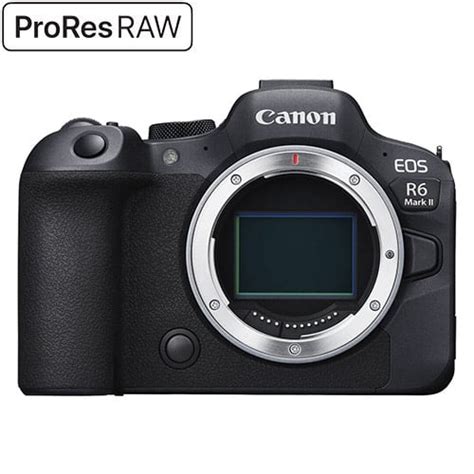
Furthermore, the video capabilities have been significantly unshackled. Moving from the original R6, the Mark II removes the 30-minute recording limit and solves the overheating issues that plagued the earlier generations. It can record 4K 60p oversampled from 6K across the full width of the sensor, providing a level of detail and color depth that rivals dedicated cinema cameras. The addition of features like the detected-only AF mode (which stops the lens from hunting to the background if a subject leaves the frame) shows that Canon is listening to the specific needs of solo operators and documentarians.
Looking for the best Electronics deals on Amazon?
View Offers →Pros & Cons
- Pro: Exceptional Autofocus tracking that covers nearly 100% of the frame with intelligent subject recognition.
- Pro: Class-leading 40fps electronic shutter speed, making it a viable tool for professional sports and action.
- Pro: Hybrid ergonomics with a dedicated Photo/Video toggle switch, allowing for independent settings for each mode.
- Pro: Robust In-Body Image Stabilization (IBIS) that offers up to 8 stops of compensation with stabilized RF lenses.
- Pro: Professional video tools like False Color, Focus Breathing Compensation, and 6K RAW external recording.
- Con: The micro-HDMI port is less durable than a full-sized HDMI port, which may concern regular external monitor users.
- Con: 24.2 megapixels may be limiting for photographers who frequently need to perform heavy cropping for wildlife or landscape.
- Con: The Multi-Function Shoe requires an adapter for some older weather-sealed flashes to maintain water resistance.
Comparison Table: R6 Mark I vs. R6 Mark II
| Feature | EOS R6 (Original) | EOS R6 Mark II |
|---|---|---|
| Sensor Resolution | 20.1 Megapixels | 24.2 Megapixels |
| Electronic Shutter Speed | 20 fps | 40 fps |
| Video Recording Limit | 29 mins 59 secs | No Limit (Unlimited) |
| Overheating Management | Moderate (Can occur in 4K60) | Significantly Improved (Rarely occurs) |
| Subject Detection | Human, Animal, Vehicle | Adds Planes, Trains, Horses, Insects |
| Video Tools | Basic Zebras | False Color, Breathing Comp, Pre-recording |
Buying Guide: Is the R6 Mark II Right for You?
Choosing a camera in the $2,000 to $2,500 price bracket is often the most difficult decision for a buyer because the competition is so fierce. When considering the EOS R6 Mark II, you should analyze your specific output needs. This camera is designed for the "Moment Seeker." If your work involves unpredictable action—weddings, news, sports, or wildlife—the combination of 40fps and the pre-recording buffer makes this the most capable camera in its price range.
Consider the R6 Mark II if:
- You are a hybrid creator who needs to switch between high-end stills and professional video multiple times a day.
- You frequently shoot in low-light environments like reception halls, gyms, or theaters where high ISO performance is critical.
- You already own or plan to invest in Canon RF glass, which is currently some of the best optical engineering on the market.
Look elsewhere if:
- You are primarily a studio or landscape photographer who requires 45+ megapixels for massive gallery prints or extreme cropping. In that case, the EOS R5 or a medium format system might be better.
- You are on a strict budget and do not need the video features; the original R6 or the R8 might provide better value for money while sharing the same lens mount.
One factor buyers often overlook is the environmental sealing and build quality. The R6 Mark II is built on a magnesium alloy chassis with extensive weather sealing. While it isn't as indestructible as the flagship R3, it is designed to withstand the rigors of professional use in light rain, dusty environments, and humid conditions. For the traveling photographer, this peace of mind is worth the investment over lower-tier models that use more plastic in their construction.
Conclusion
The Canon EOS R6 Mark II is a masterclass in purposeful evolution. While its headline specs are impressive, it is the "hidden" features—like the pre-recording buffers, the professional False Color video tools, and the moving subject HDR—that truly define its value. These tools represent a shift toward a more intelligent camera that doesn't just record what you see, but helps you overcome the physical and biological limitations of photography and filmmaking.
By integrating features that were previously found only in much more expensive cinema hardware or niche sports bodies, Canon has created a device that feels limitless in a variety of professional scenarios. Whether you are using the Multi-Function shoe to simplify your audio setup or relying on the 40fps burst to catch a split-second goal, the R6 Mark II proves to be a reliable partner. It is a camera that grows with the user, offering deeper layers of functionality as one's technical requirements become more demanding. For anyone looking for a versatile, powerful, and future-proof camera, understanding these five hidden features is the first step in unlocking the full potential of this remarkable piece of electronics.