Biggest Stealth 600 Wireless Buying Mistakes (And How to Avoid Them)
The Stealth 600 Wireless has become a familiar name for console gamers seeking an affordable, no-fuss wireless headset. It promises an easy pairing experience, a gaming-focused sound signature and a comfortable fit for long sessions. That combination attracts a lot of buyers — and along with that interest comes a predictable set of purchasing mistakes. This article walks through the most common errors people make when choosing a Stealth 600 Wireless headset, explains why those mistakes matter in real-world use, and gives clear, actionable advice for avoiding them. It also includes an honest product analysis, a side-by-side comparison with relevant alternatives, pros and cons, and a practical buying guide so readers end up with a headset that fits their needs.
Why these mistakes matter
Buying the wrong headset is expensive in time and money. Gamers care about comfort during marathon sessions, clear voice chat for team coordination, reliable wireless performance in crowded Wi‑Fi environments, and platform compatibility. Overlooking even one of these areas can turn what should be a seamless improvement to the setup into an ongoing annoyance: dead batteries mid-match, mics that make teammates ask for repeats, or a headset that won't connect to the intended platform without extra hardware. The Stealth 600 Wireless is marketed toward console players, and several of the mistakes below stem from not matching expectations to the product’s design and tradeoffs.
Top buying mistakes and how to avoid them
Mistake 1 — Assuming one Stealth 600 fits every platform
The Stealth 600 name is used for console-focused models that come in platform-specific variants. Buyers often assume a single box will work identically on Xbox, PlayStation and PC. In practice, versions may use different wireless methods or lack certain console-native features.
How to avoid it: confirm the exact variant before purchase. Look for the platform label on the box or product page and verify whether it uses native console wireless, a USB dongle, or a 2.4 GHz transmitter. If the buyer intends to use the headset across multiple devices (console + PC), check whether the headset supports that combination or if additional adapters are required.
Mistake 2 — Expecting Bluetooth multi-device convenience
Many shoppers expect modern headsets to include Bluetooth for phone calls and background music. The Stealth 600 Wireless line prioritizes low-latency console wireless connectivity, and some versions do not include Bluetooth or include a limited Bluetooth feature set.
How to avoid it: decide whether Bluetooth is essential. If mobile pairing, dual audio streams or quick phone call handling are priorities, pick a headset that explicitly supports Bluetooth alongside low-latency gaming wireless — or plan to use the phone separately.
Mistake 3 — Buying solely on driver size or marketing claims
Marketing highlights like “50 mm drivers” or “virtual surround” can be misleading if taken as the only metric. Drivers tell part of the story, but tuning, driver quality, earcup seal and software equalization heavily influence perceived sound. Virtual surround modes vary widely in implementation and usefulness.
How to avoid it: read listening impressions and real-world usage notes. For competitive multiplayer, prioritize clarity and positional cues over booming bass. For single-player immersion, a warmer, bass-forward tuning may be preferable. If possible, audition the headset or check multiple independent reviews that test the headset in the same use cases the buyer cares about (competitive shooters, racing, open-world exploration, voice chat).
Mistake 4 — Overlooking battery real‑world runtime and charging behavior
Advertised run times often reflect light-use conditions. Gamers who stream, use chat monitoring, or enable additional features (like LED illumination or high volume) will see shorter battery life. Some Stealth 600 models have non-replaceable batteries, so age and heavy daily use reduce overall lifespan.
How to avoid it: treat battery life as an estimate. Look for user reports detailing typical hours of continuous gameplay. If long sessions or multiple daily sessions are common, prioritize models with longer rated battery life, an easy charging method, or consider a wired alternative for uninterrupted play.
Mistake 5 — Ignoring microphone considerations
A clear boom mic is essential for team games and streaming. Mic quality varies; some buyers incorrectly presume that any headset mic is “good enough.” Common real-world problems include muffled vocals, excessive room noise, or boom placement that clips when the head moves.
How to avoid it: inspect mic design and features (flip-to-mute, detachable booms, mic monitoring). Read voice chat tests from reviewers and check whether the mic is optimized for close-talk or picks up ambient noise. For recurring communication-heavy play, prioritize a headset with a clean, noise-rejecting boom mic rather than one that sacrifices clarity for convenience.
Shop the latest Audio & Headphones picks on Amazon.
Shop Amazon →Mistake 6 — Not testing comfort for long sessions
Comfort is subjective and depends on head shape, ear size, glasses use, and how long sessions run. Padding that feels plush in photos may press against the ear over hours, and clamping force that initially feels secure can become painful.
How to avoid it: where possible, test the headset in person. If buying online, check retailer return policies and try the headset for at least an hour in realistic conditions (game audio, voice chat). Look for replaceable ear cushions and a lighter overall build if extended comfort matters.
Mistake 7 — Failing to consider firmware and software support
Headsets sometimes receive important firmware updates that fix connectivity, battery, or audio tuning issues. Buyers who ignore the software ecosystem may end up with a product that behaves suboptimally out of the box.
How to avoid it: research the manufacturer’s software support and update history. Confirm there is an easy-to-use PC utility (if needed) and that firmware has been updated in the past year. If the company provides regular updates, that’s a good sign for long-term value.
Mistake 8 — Relying on retail photos instead of specification details
Photos rarely show small but important details like whether controls are physical or touch-based, whether the mic is removable, or what the ports look like. Those details affect durability and everyday convenience.
How to avoid it: read the full specifications and user Q&A sections on retailer or manufacturer pages. Look for photos of the actual ports and controls in reviews rather than studio renders. Check whether the controls are accessible during play (e.g., thumb-accessible on the ear cup) and whether the mic can be stored safely.
Detailed product review and analysis — Stealth 600 Wireless
The Stealth 600 Wireless family targets console gamers who want a straightforward wireless solution with good voice chat. Rather than attempting to be everything to everyone, this headset typically focuses on the most-used features for its audience: easy pairing with a console, a robust boom mic, a comfortable fit for long sessions, and a gaming-forward sound signature that helps in competitive matches.
Design and comfort
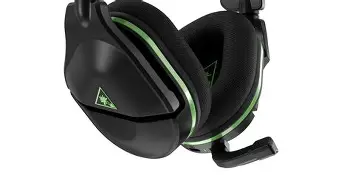
Design choices favor practical comfort: over-ear cups with soft padding and a relatively lightweight headband. For real-world use, this means the headset generally performs well in sessions lasting multiple hours. However, long-term comfort varies with head shape and whether the player wears glasses. The earcup size and clamping force are important; tight clamping can improve stability but will reduce comfort over time.
Sound quality and tuning
The Stealth 600 Wireless tends to be tuned with a gaming emphasis: clear mids for voice, tightened bass to make explosions and impacts feel satisfying, and a tilt toward forward presentation that highlights in-game cues. For competitive multiplayer, the clarity of footsteps and directional cues is often acceptable to good out of the box. For music or cinematic single-player titles, the tuning can sound colored compared with neutral audiophile headphones, but many players appreciate the excitement that the tuning brings.
Microphone and voice chat
One of the Stealth 600's stronger areas is practical mic design. The boom mic typically offers clear pickup for casual and competitive voice chat, with flip-to-mute convenience that prevents accidental broadcasting. Real-world voice tests show the mic works well in typical home environments, although very noisy rooms or open-plan living situations will still cause background pickup. For streamers or content creators who need broadcast-quality audio, an external microphone will usually remain the better choice.
Wireless performance and latency
Low-latency wireless performance is core to the Stealth 600's design. In real-world settings — living rooms with crowded Wi‑Fi and multiple Bluetooth devices — the headset generally maintains a stable connection at typical console distances. However, performance depends on the particular variant and the presence of radio interference in the home. Gamers who play next to large Wi‑Fi routers, microwaves, or crowded 2.4 GHz bands may notice occasional dropouts.
Battery life and charging
Typical battery life claims are in a moderate range suitable for most gaming sessions. Real-world runtimes depend on volume, voice chat activity and any additional enabled features. Charging behavior (how quickly it charges and whether the headset operates while charging) affects usability: some users prefer the ability to play wired while the internal battery charges; others accept wireless-only operation but plan around charging windows.
Discover deals on Audio & Headphones — updated daily.
Shop Amazon →Software and customization
Stealth 600 Wireless may be complemented by basic software for firmware updates and some sound presets, but it is not usually a heavily software-driven headset with deep EQ profiles. That simplicity suits buyers who prefer plug-and-play convenience, though power users who want per-frequency EQ control will find the options limited compared to headsets with dedicated companion apps.
Pros & Cons
- Pros:
- Platform-tailored wireless makes console pairing simple and low-latency
- Comfortable ear cushions and practical headband for extended sessions
- Good out-of-box mic for party chat and competitive play
- Plug-and-play simplicity with minimal setup required
- Generally good value for the features offered
- Cons:
- Variant confusion: some models are platform-specific and not universally compatible
- Limited Bluetooth or multi-device connectivity on many versions
- Software customization and EQ depth are often limited
- Battery life is adequate but not class-leading for power users
- Sound tuning may be colored; not the best choice for purist music listening
Comparison table — Stealth 600 Wireless vs. common alternatives
| Feature | Stealth 600 Wireless | Console-Focused Competitor | PC/Hybrid Option |
|---|---|---|---|
| Primary use case | Console gaming (plug-and-play) | Console gaming with proprietary features | PC + Console hybrid with Bluetooth |
| Wireless type | Console-native/USB transmitter (platform-dependent) | Similar console-native connection | 2.4 GHz + Bluetooth multi-point |
| Mic quality | Good for party chat and competitive play | Varies; some rivals have broadcast-grade mics | Often detachable, higher-end mics available |
| Battery life (real-world est.) | Moderate; covers typical sessions | Varies; some models longer | Often longer with Bluetooth off or larger battery |
| Comfort for long sessions | Generally comfortable; depends on head size | Varies; premium rivals often lighter or better padding | Wide range; premium PC headsets optimized for long wear |
| Software customization | Basic to moderate | Some rivals have deep EQ apps | Often extensive with detailed EQ |
| Price/value | Good for budget-to-midrange buyers | Comparable or higher | Often higher, reflects broader feature set |
Buying guide — how to choose the right Stealth 600 for the intended use
1. Confirm platform compatibility first
Identify the console or device that will be the primary use case. If the buyer will play mainly on Xbox, make sure the Xbox-branded variant is selected. For PlayStation players, choose the PlayStation variant. If using with PC as well, verify whether the headset supports the desired PC features or whether a USB adapter is needed.
2. Prioritize mic clarity for multiplayer
Buyers who play team-based competitive games should place mic quality near the top of the checklist. Prefer boom mic designs with noise rejection and flip-to-mute functionality. Review voice samples from independent tests, and if the buyer streams or records content, plan to upgrade to a dedicated mic later.
3. Consider battery habits and backup options
Think about session length and charging habits. If overnight charging is the only convenient option, shorter battery life is manageable. If sessions span many hours or multiple sessions per day, select a model with longer runtime or the ability to play while charging. Consider keeping a wired pair for backups.
4. Test or check return policies for comfort
Comfort is personal. If possible, try the headset in person. If buying online, confirm the return window and restocking fees. Try the headset with glasses on and wear it for at least an hour with game audio and voice chat enabled to evaluate clamping force and breathability of the ear cushions.
5. Research firmware and support
Check whether the manufacturer provides an updater and how frequently firmware updates are released. Good support can turn a mediocre initial experience into an improved long-term one. Also, check warranty length and the process for repairs or replacements.
6. Decide on software needs
Power users who want deep EQ and per-game profiles should confirm whether the Stealth 600 variant supports meaningful customization. If not, be prepared to accept the out-of-box tuning or look to alternatives with richer software ecosystems.
7. Check real-world wireless performance reports
Read user reports about interference and dropouts in living rooms similar to the buyer’s setup. Apartment dwellers with many neighboring Wi‑Fi networks may see more interference than those in detached homes. If interference is a concern, consider running the console and headset in clear channels, or look for headsets with robust 2.4 GHz implementations or dual‑band options.
8. Evaluate long-term value vs. short-term savings
Cheap headsets can save money up front but may need replacement sooner due to battery degradation or build quality. If the buyer expects heavy use over years, spending more for longer warranties, replaceable parts (like ear cushions), and better long-term support may be more economical.
Checklist before buying
- Confirm platform-specific variant and wireless method
- Look for recent user feedback on battery endurance
- Listen to voice samples or read mic tests
- Verify return policy and warranty
- Decide whether Bluetooth or multi-device pairing is required
- Check if the headset supports playing while charging if downtime is a concern
- Compare alternatives if deep EQ or broadcast-quality mic is needed
Conclusion
The Stealth 600 Wireless is a solid, purpose-built choice for many console gamers: it delivers straightforward wireless convenience, a practical mic for team chat, and a comfortable fit for long sessions. The most frequent buying mistakes stem from mismatched expectations — expecting universal compatibility, assuming Bluetooth or advanced software features are included, or prioritizing marketing specs over real-world behavior. By confirming the specific variant, checking real-world battery and mic performance, testing comfort, and understanding the product’s software and support model, buyers can avoid common pitfalls and select the Stealth 600 configuration that truly fits their gaming lifestyle. Thoughtful selection — rather than impulse purchase — turns this popular headset into a reliable everyday tool rather than an occasional frustration.