Head-to-Head: Dji Osmo 360 vs Nisi V7 Filter Kit (Detailed Comparison)
The landscape of modern photography and videography is defined by two distinct paths: immersive, boundary-pushing technology and the refinement of classical image-making techniques. On one hand, we have the rise of the specialized action camera, exemplified by the DJI Osmo 360 (part of DJI's strategic expansion into the spherical video market), which aims to capture everything at once. On the other, we have the NiSi V7 Filter Kit, a pinnacle of optical precision designed to give creators absolute control over light, reflection, and exposure before the sensor even processes the data. While these products serve vastly different purposes, they often find themselves in the same camera bags of landscape photographers, travel vloggers, and professional cinematographers who refuse to compromise on quality.
This comparison delves into the nuances of these two powerhouses. We will explore how a software-driven, all-in-one capture device like the Osmo 360 stacks up against the tactile, glass-centric world of the NiSi V7 system. For the modern creator, the question isn't always about which tool is "better," but rather which tool facilitates the specific vision they have for their work. Whether you are aiming to capture a 360-degree descent down a mountain or a ten-minute long exposure of a coastal sunset, the choice between these two gear sets represents a fundamental decision in your creative workflow.
The Evolution of Spherical Excellence: DJI Osmo 360
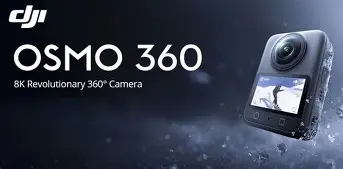
The DJI Osmo 360 represents a significant leap in the world of omnidirectional filmmaking. Built upon DJI's legacy of stabilization and sensor optimization, this device is designed for the creator who wants to "shoot first and point later." In the context of the current market, where social media formats demand everything from 9:16 vertical clips for TikTok to 16:9 cinematic horizontal shots for YouTube, the Osmo 360 offers a unique solution by capturing a full spherical environment that can be reframed in post-production.
The hardware itself is a marvel of miniaturization. Featuring dual high-resolution sensors positioned back-to-back, it utilizes sophisticated internal stitching algorithms to minimize the "stitch line" that has historically plagued 360-degree cameras. What sets the DJI ecosystem apart is the RockSteady stabilization. For creators who are mounting their cameras to helmets, car hoods, or specialized boom poles, the ability to maintain a level horizon and smooth out high-frequency vibrations is paramount. The Osmo 360 doesn't just record video; it records data that allows for gimbal-like smoothness without the bulk of a mechanical stabilizer.
From a usability standpoint, the Osmo 360 is built for the elements. It features a ruggedized exterior and waterproof ratings that allow it to go where traditional mirrorless setups—even those equipped with the NiSi V7—would struggle. However, the reliance on digital processing means that the image quality, while impressive for its class, is subject to the limitations of sensor size and high-bitrate compression. In low-light scenarios, the small pixels can struggle with noise, though DJI’s night mode processing has made strides in mitigating this through multi-frame noise reduction.
Optical Precision and Mechanical Mastery: NiSi V7 Filter Kit
In contrast to the digital wizardry of DJI, the NiSi V7 Filter Kit is a testament to the enduring importance of high-quality glass. The V7 system is the successor to the highly acclaimed V6, and it remains the gold standard for 100mm square filter holders. For the photographer who uses a DSLR or Mirrorless system, the V7 is not just an accessory; it is a fundamental part of the lens's optical path. The kit typically includes the V7 holder, a True Color CPL (Circular Polarizer), and several adapter rings to fit various lens diameters.
The standout feature of the NiSi V7 is the True Color CPL. One of the primary complaints with landscape filters is the introduction of a "color cast"—a slight shift toward yellow or blue that can be difficult to correct in post-processing. NiSi solved this by developing a polarizer that maintains neutral color fidelity across the spectrum. For videographers and photographers alike, this means that the blues of the sky and the greens of the foliage remain natural while reflections are effectively eliminated from water or glass surfaces.
The V7 holder itself is machined from aviation-grade aluminum and features a unique rotation mechanism. Unlike cheaper systems, the V7 allowed you to rotate the CPL independently using small wheels on the back of the holder, even when square Neutral Density (ND) or Graduated Neutral Density (GND) filters are inserted. This mechanical precision allows for a workflow that is slow, deliberate, and focused on getting the image right "in-camera." While the Osmo 360 relies on software to fix exposure and framing, the NiSi V7 empowers the user to manipulate physical light, resulting in a raw file that contains significantly more dynamic range and color depth than any action camera could hope to achieve.
Find top-rated Cameras & Photography products at great prices.
Browse Now →Pros and Cons: DJI Osmo 360
- Pro: Unlimited framing possibilities in post-production allow for multiple "crops" from a single recording session.
- Pro: Industry-leading RockSteady stabilization eliminates the need for bulky gimbals in high-action environments.
- Pro: Extremely portable and durable, often replacing the need for a secondary "B-roll" camera.
- Pro: Robust software ecosystem with the DJI Mimo app makes editing and sharing spherical content intuitive for beginners.
- Con: Image sensor size limits dynamic range and low-light performance compared to full-frame cameras using NiSi filters.
- Con: Managing large 360-degree video files requires significant storage space and powerful computer hardware for editing.
- Con: The "stitch line" can still be visible in certain lighting conditions or when objects are too close to the camera.
Pros and Cons: NiSi V7 Filter Kit
- Pro: True Color CPL provides unparalleled reflection control without color shifting, saving hours in post-production.
- Pro: Fast-loading "Point-to-Point" design makes it easy to swap filters in the field, even with gloves on.
- Pro: Superior build quality ensures the holder remains secure on the lens during long exposures or in windy conditions.
- Pro: Compatible with a wide range of square filters (ND, GND, Night, Star), providing modularity for different genres.
- Con: Requires a dedicated lens system and cannot be used with simple fixed-lens action cameras like the Osmo 360.
- Con: The kit has a steeper learning curve, particularly when balancing Graduated ND filters with a moving horizon.
- Con: Increasing the complexity of the optical path requires diligent cleaning to avoid flare and dust spots.
Direct Comparison: Technology vs. Glass
When we place these two products side-by-side, we are looking at the two ends of the "content creation" spectrum. The Osmo 360 is built for speed, immersion, and versatility. It is the tool for the creator who is part of the action. If you are hiking a trail and want to capture the vastness of the canyon while also showing your own expression, the 360-degree field of view is unbeatable. You don't have to worry about missing the shot because the camera sees everything.
Alternatively, the NiSi V7 is built for the perfectionist. It is for the photographer who has arrived at a location an hour before sunrise to wait for the perfect light. By using a 10-stop ND filter from the NiSi system, you can turn crashing waves into a surreal mist or make clouds streak across the sky during a three-minute exposure. This is a level of artistic expression that is physically impossible for an action camera. Since the Osmo 360 uses a rolling shutter and lacks a physical aperture or the ability to mount high-quality square glass filters (without cumbersome third-party adapters), it cannot replicate the "long exposure" aesthetic with the same clarity and organic feel.
The hardware interaction is also fundamentally different. Using the DJI Osmo 360 involves interacting with a touchscreen and an app. It is a very "digital" experience. Using the NiSi V7 is a tactile, "analog" experience. You feel the click of the holder attaching to the adapter ring; you feel the smooth resistance of the CPL dial. For many enthusiasts, this physical connection to the craft is part of the appeal of photography.
| Feature | DJI Osmo 360 | NiSi V7 Filter Kit |
|---|---|---|
| Primary Use Case | Action, Vlogging, Immersive Sports | Landscapes, Long Exposure, Architectural |
| Optical Capability | Dual Fish-eye Lenses (Digital Stitching) | High-purity Optical Glass (Physical Filtering) |
| Stabilization | Digital RockSteady 3.0 / HorizonSteady | N/A (Requires Tripod) |
| Reflection Control | Digital Multi-exposure Processing | Physical True Color Circular Polarizer |
| Environmental Protection | Waterproof, Dustproof, Shockproof | Requires careful handling of glass elements |
| Post-Processing | Extensive (Reframing, Stitching) | Minimal to Moderate (Color correction only) |
| Setup Speed | Instant (Power on and record) | Slow (Manual mounting and alignment) |
Buying Guide: Which One Fits Your Workflow?
Deciding between these two items—or more accurately, deciding which one to prioritize in your budget—depends heavily on your intended output. If you find yourself frustrated by missing "the moment" because your camera was pointed in the wrong direction, or if you want to create content that allows the viewer to look around in a VR headset, the DJI Osmo 360 is an essential purchase. It is also the better choice for those who travel light and don't want to carry a tripod, as its internal stabilization allows for handheld shots that look buttery smooth.
However, if your goal is to produce large-format prints or create cinematic landscape videos with a "high-end" look, the NiSi V7 Filter Kit is the superior investment. It is important to remember that the V7 is a system. Once you own the holder, you can add different filters such as the "Natural Night" filter for astrophotography or the "Medium GND" for complex cityscapes. It is a tool that grows with your skill level and encourages you to understand the physics of light.
For professional videographers, the answer is often "both." A common real-world use case involves using the Osmo 360 to capture immersive "behind-the-scenes" or high-action shots that are impossible for a large camera to get, while using a mirrorless camera with the NiSi V7 for the "hero" shots of the landscape. The V7 allows the primary camera to maintain a 180-degree shutter angle (the cinematic gold standard) by using ND filters to control exposure in bright daylight, something the Osmo 360 often struggles with unless you use small, clip-on ND filters that don't offer the same optical quality as NiSi glass.
Considerations for Action Creators
Action creators should focus on the DJI Osmo 360’s ability to handle high-vibration environments. The camera’s AI-driven subject tracking is a game-changer for solo creators. You can set the camera on a rock, ride past it, and in the app, tell the software to keep you centered in the frame. The camera didn't physically move, but because it captured the whole sphere, the software creates a virtual cameraman for you.
Considerations for Fine Art Photographers
Fine art photographers should prioritize the NiSi V7 because of the "True Color" technology. In previous years, square filter users had to deal with a "magenta shift" in many ND filters. NiSi has effectively neutralized this, meaning your raw files require less "massaging" in Lightroom. This preserves the integrity of the sensor’s data and leads to better dynamic range recovery in the shadows and highlights.
Find top-rated Cameras & Photography products at great prices.
Shop Amazon →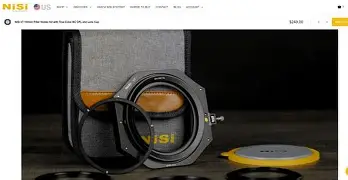
Integration into a Modern Kit
The DJI Osmo 360 often thrives when paired with accessories like the invisible selfie stick. This stick is automatically removed from the footage by the camera’s software, giving the illusion of a drone hovering just a few feet away from the user. This "third-person view" is the hallmark of 360-degree content and provides a perspective that neither a standard camera nor a filtered lens can replicate. It is about the "story of the space."
The NiSi V7, conversely, is about the "poetry of the frame." When you slide a GND filter into the aluminum slots of the V7 holder, you are making a conscious decision about where the sky ends and the land begins. You are balancing the bright sun with the dark foreground. This teaches a photographer about composition and balance in a way that an omnidirectional camera simply cannot. The V7 holder’s new "Point-to-Point" design ensures that even in the rush of a fading sunset, you can snap the holder onto the lens with minimal fumbling.
In terms of longevity, the NiSi V7 wins. While the DJI Osmo 360 is a piece of consumer electronics that will inevitably be superseded by a newer model with a better sensor in two or three years, the NiSi V7 is a mechanical tool. Good glass and a well-built aluminum holder can last a decade or more, moving from one camera system to the next as long as you have the correct adapter rings. It is a long-term investment in optical quality.
Conclusion
The DJI Osmo 360 and the NiSi V7 Filter Kit represent two different philosophies of image capture. The Osmo 360 is the ultimate tool for documentation and immersion. It removes the stress of framing and allows the creator to focus on the experience, confident that the technology will capture the entirety of the moment with incredible stability. It is a digital solution for a fast-paced, multi-platform world.
The NiSi V7 Filter Kit remains the ultimate tool for deliberate creation and optical excellence. It demands more from the user—a tripod, a slower pace, and a deeper understanding of exposure—but it rewards that effort with image quality that is physically unattainable through digital manipulation alone. The "True Color" CPL and the modular square filter system ensure that the light hitting your sensor is as perfect as possible.
For the modern photographer or videographer, choosing between these two is less about a conflict of brands and more about identifying the gaps in your creative toolkit. If your work lacks "energy" and "perspective," the Osmo 360 is the answer. If your work lacks "polish," "depth," and "reflection control," the NiSi V7 is the tool that will elevate your portfolio to a professional standard. Both occupy a vital space in the world of high-end camera gear, and both continue to push the boundaries of what is possible when we press the shutter button.