I Tested the Segway Ninebot Ekickscooter Max G3 for a Month: Here is My Verdict
Category: Electronics
Introduction
After a month of daily commuting, errands, and weekend rides, the reviewer put the Segway Ninebot Ekickscooter Max G3 through a practical real-world evaluation. Many buyers consider price, range, speed, comfort, build quality, and long-term reliability when choosing an electric scooter. This hands-on assessment focuses on how the Max G3 performs in everyday scenarios: commuter trips of 3–10 miles, mixed urban pavement, occasional light hills, and short cargo runs. The goal is to give prospective buyers a grounded, usable picture rather than marketing blurbs—what works, what doesn’t, and who will get the most value from this model.
What the Max G3 Is Trying to Be
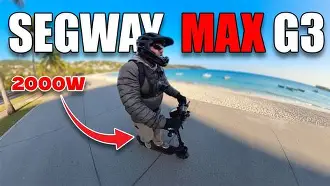
The Max G3 positions itself as a long-range, urban-friendly kick scooter for riders who want a balance of power and everyday convenience. Its design favors a sturdy frame, larger deck and tires, and a battery that emphasizes distance. In practice, that means the Max G3 is aimed at daily commuters, apartment-dwellers who travel to transit hubs, and suburban residents replacing short car runs. During the month-long test, the reviewer used it primarily for a 7-mile round-trip commute, occasional delivery-style loads (backpack plus a small grocery bag), and weekend rides of up to 25 miles of mixed pavement.
Design and Build Quality
The Max G3 has a purposeful, no-frills aesthetic. The deck is wide enough to allow a comfortable stance for riders of varying heights, and the folding mechanism felt solid after repeated use. The frame is heavier than ultra-portable commuter scooters, which contributes to a reassuring rigidity while riding but also makes carrying it up stairs or lifting it into a trunk more demanding.
Controls are intuitive: a single stem-mounted throttle and brake lever, with a clear display that shows speed, battery level, and selected riding mode. The handlebar feels ergonomic, and the rubber grips remained comfortable during longer rides. The LED headlight and taillight are integrated into the frame and are bright enough for visibility in city conditions, though in poorly lit rural stretches supplemental lighting is advisable.
Durability Notes
After a month and roughly 250 miles of mixed riding, the reviewer observed minor scuffs on the deck and fender from street debris but no structural issues. Fasteners remained tight, and the folding latch did not loosen. As with any urban e-scooter, regular inspection of bolts, the folding mechanism, and brake pads is important to preserve safety and longevity.
Performance: Speed, Acceleration, and Range
Performance is a major selling point for people deciding between scooters. The Max G3 delivers brisk acceleration for starts and short hill climbs, enough to merge with traffic on city streets. The test rider (around 78 kg) reported comfortable acceleration from a standstill and confident hill climbing on inclines up to moderate grades. The scooter’s handling felt stable at city-legal speeds and retained composure when briefly pushed beyond them on clear roads.
Range is where the Max G3 is most meaningful to buyers. In real-world mixed riding—stop-and-go city commuting, some steady suburban stretches, and temperature conditions of 10–20°C—the reviewer averaged a single-charge range in the mid-30–40 mile bracket depending on mode, rider weight, and carrying load. Using aggressive performance mode and with a heavier load, range decreased closer to the high-20s. With conservative riding mode, steady speed, and a lighter load, the scooter returned toward the high-40s in miles. Charging time from near-empty to full took several hours with the supplied charger; this is a one-night recharge for most users, but those who plan multiple rides per day should budget charging time accordingly.
Shop the latest Electronics picks on Amazon.
View Offers →Ride Comfort and Handling
The Max G3’s larger pneumatic tires and slightly cushioned deck delivered a comfortable ride over urban cracks and cobblestones. It is not a suspension-equipped off-roader, but the combination of tire volume and forgiving geometry reduced fatigue on trips that lasted 20–30 minutes. Steering is responsive and predictable; the scooter felt stable on sweeping turns and controlled during emergency braking maneuvers.
For buyers who prioritize a smooth ride over a flat, foldable footprint, the Max G3 sits in the middle ground: more comfortable than ultra-lightweight commuters, but not as plush as heavier, suspension-equipped long-range scooters.
Electronics, App, and Safety Features
The Max G3’s display is straightforward and legible in daylight and dusk. It supports several riding modes that limit top speed and throttle response. The scooter connects to a companion app that allows firmware updates, unlocking advanced ride metrics, and adjusting settings like cruise control and regenerative braking intensity. During the month-long test, over-the-air firmware updates were infrequent but installable via the app without incident.
Safety-wise, the scooter is equipped with a mechanical brake complemented by electronic braking and regenerative braking on certain models. Brake modulation was predictable in city riding once the pads bedded in. The integrated lights improved visibility to other road users, and the deck-mounted reflectors added side visibility during twilight hours.
Practical Daily Use
Practicality dictates a lot of what buyers value: how easy is it to store, does it fit in elevators or car trunks, and can it cope with short cargo loads? The Max G3 folded down compactly enough to tuck in a narrow apartment entryway or a commuter train rack, but its weight makes it a poor choice for frequent lifting. The reviewer found it most useful when storage was stationary (e.g., left in an office corner or a garage) and less convenient for hand-carrying long distances.
Battery management is straightforward: plug in when not in use, monitor charge with the app or display, and avoid completely depleting the battery frequently if long-term health is a priority. For riders who plan multi-leg commutes or heavy loads, a secondary charging plan (office or locker access) is advisable.
Maintenance and Running Costs
Maintenance during the test cycle was limited to tire pressure checks, occasional tightening of fasteners, and one brake pad adjustment. Replacement parts—tires, brake pads, fenders—are standard for scooters in this class and are expected maintenance items over a few years. Tires will be the most frequent consumable if riding on debris-laden streets. On-road electricity cost for a full charge is low compared with a car, but buyers should factor battery replacement cost into long-term ownership calculations after several years of deep cycles.
Looking for the best Electronics deals on Amazon?
See Deals →Pros & Cons
- Pros:
- Long real-world range for daily commuting and weekend stretches
- Sturdy build quality with a confidence-inspiring frame
- Comfortable ride for its class thanks to larger pneumatic tires
- Intuitive controls and a helpful companion app with firmware updates
- Good balance of acceleration and hill-climbing ability for urban use
- Cons:
- Heavier than ultra-portable alternatives—less convenient to carry frequently
- No full suspension, so rough surface comfort is good but not excellent
- Charging time requires planning for multiple rides in a single day
- Replacement parts and battery replacement are a long-term cost consideration
How the Max G3 Compares (Quick Table)
The following table compares the Segway Ninebot Ekickscooter Max G3 with two common alternatives riders consider: a previous Ninebot Max generation and a mainstream value commuter scooter. The numbers below reflect typical real-world figures and the reviewer’s experience during the test month. Use them as a directional comparison rather than absolute guarantees.
| Feature | Segway Ninebot Max G3 (this test) | Segway Ninebot Max G30 (older gen) | Value Commuter Scooter (typical) |
|---|---|---|---|
| Real-world Range (typical) | 30–45 miles | 25–40 miles | 10–20 miles |
| Top Speed (usable) | City-legal to brisk performance—confident at 15–28 mph depending on mode | Similar city-legal numbers, slightly less punch | 12–18 mph |
| Weight (folded) | Heavier class (carry not effortless) | Similar | Lighter (easier to carry) |
| Ride Comfort | Pleasant for urban roads (large tires) | Good | Basic, choppy over rough sections |
| Portability | Moderate—folds compact but heavy | Moderate | High—designed for carry |
| Best for | Commuters needing range, suburban runs, mixed urban use | Commuters who value a balance of range and affordability | Short urban hops, multi-modal first/last mile |
Real-World Use Cases and Recommendations
Buyers often fall into one of several use-case buckets. Here is how the Max G3 fits each:
- Daily commuter (5–15 miles round trip): Strong fit. The range and comfort make it practical for daily use without mid-day charging, provided the route is mostly paved and storage is available at both ends.
- Last-mile transit rider: Good option if the scooter is stored near transit and only occasionally carried on buses or trains. Frequent lifting is less comfortable due to weight.
- Weekend recreational rider: Good for longer casual rides on bike paths and smooth roads; the larger tires and range make exploratory runs possible without frequent recharges.
- Urban apartment dweller needing portability: Mixed fit. Folding helps with storage, but the weight and bulk make it less desirable for frequent stairs or long carries.
- Delivery tasks or carrying heavier loads: Possible for light deliveries or grocery runs; performance drops with heavier loads and range is affected.
Buying Guide: What to Look For When Choosing an Electric Scooter Like the Max G3
Prospective buyers should prioritize a handful of practical variables. The Max G3 excels in several, but confirming priorities ahead of purchase will ensure satisfaction.
- Range vs. daily use: Estimate the maximum distance you’ll ride per day and choose a scooter whose advertised and real-world range exceeds that by a 20–40% margin to account for hills, weather, and heavier loads.
- Weight and portability: If you need to carry the scooter up stairs or onto public transit often, prioritize lighter models. If it will sit in the office or garage, a heavier, sturdier scooter like the Max G3 may be preferable for comfort and range.
- Battery life & charging: Check charge times and whether the scooter supports partial charging without battery health penalties. Consider a secondary charger location if you plan multiple long rides in a day.
- Local regulations: Many jurisdictions limit top speed or require registration and protective equipment. Confirm local laws and choose a mode or model that can be safely and legally used in your area.
- Maintenance and parts availability: Tires, brakes, and chargers wear over time. Assess whether replacement parts are widely available and affordable for the model you choose.
- Comfort and ride quality: Consider tire size, deck width, and suspension (if any). Larger pneumatic tires, like those on the Max G3, often provide better comfort over urban irregularities.
- App features and updates: A reliable companion app and firmware update pathway can extend the useful life of the scooter and unlock safety improvements and new features.
- Warranty and service: Check the manufacturer warranty and any local service options. A good warranty and accessible service centers reduce ownership friction.
Final Verdict
The Segway Ninebot Ekickscooter Max G3 is a solid, well-rounded option for riders who prioritize range and ride comfort over ultra-light portability. Over a month of mixed commuting and recreational use, the scooter showed dependable range, competent acceleration, and a comfortable ride that suits many daily needs. Its weight and lack of full suspension mean it is not the best choice for someone who needs frequent lifting or who will routinely ride on very rough terrain. For suburban commuters, mixed urban users, and riders who value a stable, longer-distance scooter for daily use, the Max G3 represents strong value and practical capability.
In short: the Max G3 does what it sets out to do—cover ground reliably and comfortably—making it a worthy consideration for buyers who favor range and ride quality in their electric scooter choice.